How to Buy Property in Miami from Outside the U.S.
This guide expands on Javier's Miami buying advisory.
The short answer
Much of a Miami purchase can be handled from abroad. The search, the offer and contract, most due diligence, and in many cases signing and funding are coordinated remotely. What cannot be assumed in advance is the execution method: how documents will be signed, notarized and witnessed is transaction-specific and must be confirmed with the closing, title, lender and legal professionals involved.
This page covers workflow only. Legal eligibility is addressed in the guide on whether foreigners can buy property in Miami, lender programs in financing options for foreign buyers, tax orientation in taxes for foreign property buyers in Florida, and the technical mechanics of executing a closing remotely in how Florida closings can be executed remotely.
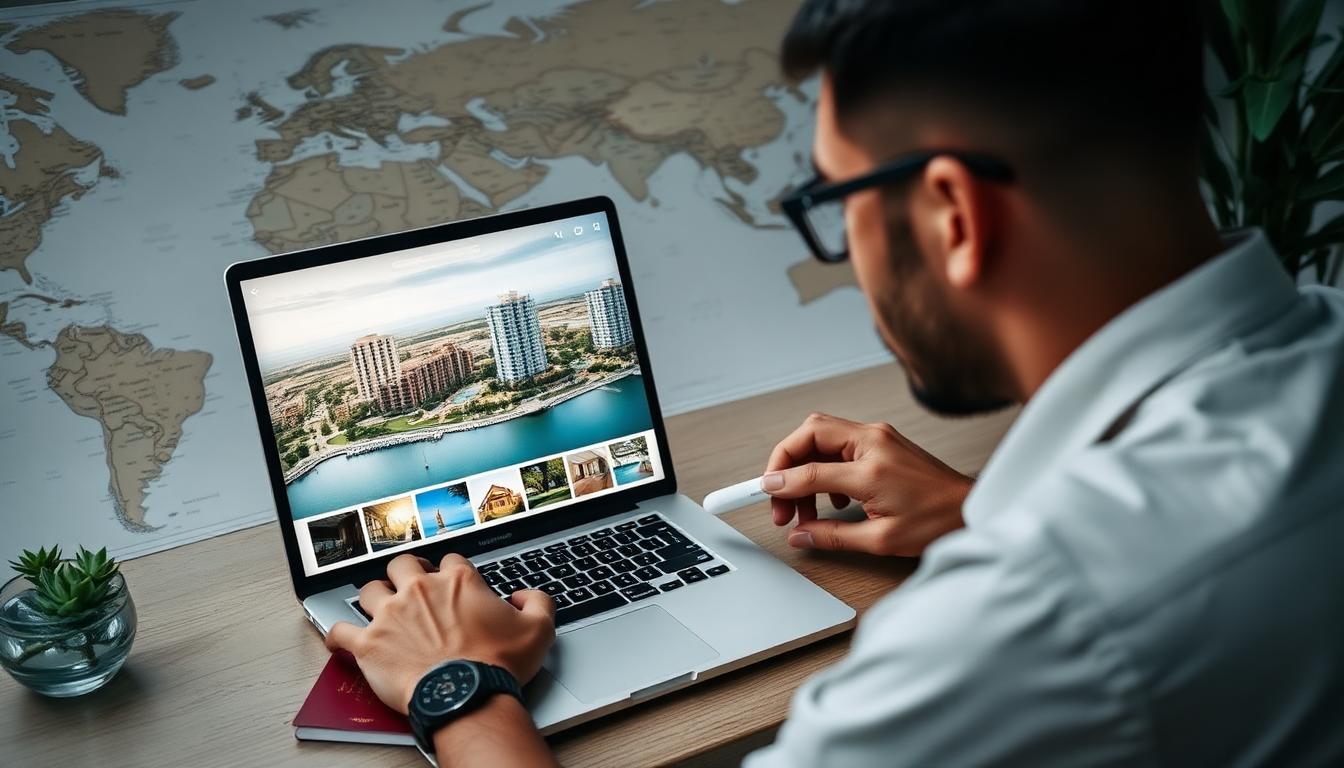
What can be handled from abroad, and what cannot
It helps to separate the parts of a purchase that travel well from the parts that depend on a physical presence in Miami or on a confirmation from a third party.
- Usually remote: search, shortlisting, live video tours, offer preparation and negotiation.
- Usually local but delegable: property access, inspections, association document retrieval, vendor visits, the final walkthrough.
- Confirmation required: signing and notarization method, witnessing, funding method and timing, acceptance of any power of attorney.
Define criteria before searching
Remote searching works when criteria are written down first: property type, budget and funding source, building or community requirements, intended use, and any timing constraints. Live inventory is searchable through the Miami listing search, and buyer representation is where those criteria are turned into a shortlist and a schedule.
Virtual tours and the limits of remote evidence
Live video tours, recorded walkthroughs, floor plans and photography are useful for screening. They are not a substitute for inspection: they compress scale and light, they rarely show mechanical systems, and they cannot record noise, odor or the behavior of a building at different times of day. Ask for unedited video of the specific unit rather than marketing material, and record any question that a camera cannot answer so it can be assigned to the inspection or document review stage.

Offer and contract coordination
An offer is prepared with the buyer's instructions on price, deposit, contingencies and timing, and it is transmitted, countered and finalized through the broker. Contract documents are commonly circulated electronically, though the acceptable execution method for each document is set by the parties and, if applicable, the lender and closing agent. Time-zone differences matter here: deadlines run on Florida time, so a buyer abroad should agree in advance how instructions will be given and how quickly a response can be produced.
Due diligence from abroad
Diligence is mostly a document and reporting exercise, which is why it adapts well to distance. The items that commonly arise include:
- property inspection by a licensed inspector, reported in writing;
- any additional specialist inspection the property or the insurer calls for, determined case by case rather than as a fixed list;
- for a condominium or association property, governing documents, budgets, assessments, insurance and any building or reserve reporting the seller or association provides;
- title search and review by the closing or title professional;
- insurance quotations, since availability and cost can affect the purchase decision.
Whether an attorney reviews particular items depends on the transaction and on the buyer's preference; legal questions raised by the documents should go to counsel rather than to a broker.
The financing track, where it applies
If the purchase is financed, the lender's process runs alongside the contract and has its own document, appraisal and timing requirements, which vary by program. Those requirements — and how borrower review and property review differ — belong to the foreign-buyer financing guide. For contract purposes, the point to settle early is what the lender needs, when, and from whom.
Title and closing coordination
The closing or title professional handles the title search, resolves items raised by it, prepares the settlement figures and coordinates recording. For a remote buyer, the useful step is to ask early which documents will require notarization or witnessing, and by what method, because that answer determines what has to be arranged and how far in advance.
Signing options — none of them universal
Florida law provides several possible routes. None of them is automatically available in every transaction, and acceptance by a lender, title underwriter or platform is a separate question from statutory permissibility.
- Remote online notarization. Under 2026 Fla. Stat. §117.265, an online notary public physically located in Florida may perform an online notarization even where the principal or witnesses are located elsewhere, with identity confirmed by the methods the statute provides.
- Electronic signatures for documents that do not require notarization, where the parties and any lender or closing agent accept them.
- Witnessing. Fla. Stat. §689.01 generally requires a conveyance of Florida real property to be signed in the presence of two subscribing witnesses, and provides that witnessing may be satisfied electronically through audio-video technology as described by statute.
- Acknowledgment taken abroad. Fla. Stat. §695.03 recognizes acknowledgments or proofs made outside the United States before specified foreign notaries or civil-law notaries, or before U.S. diplomatic or consular officers. There is no general rule that an apostille is always required.
- Power of attorney, where appropriate and where its validity, scope and execution are acceptable to the title company, lender and closing agent.
The step-by-step mechanics of these routes are covered in how Florida closings can be executed remotely.
Funds transfer and wire-fraud safety
The acceptable funding method, the sending route and the timing it requires must be confirmed with the closing professional and with the sending and receiving institutions — not assumed. Cross-border transfers can involve intermediary banks, compliance review and cut-off times that a buyer cannot control from abroad, so the schedule should be established before a closing date is committed.
Verify wire instructions by telephone using a number obtained independently of email, and treat any emailed change of instructions as suspicious until verified by voice. Reporting guidance is published by the FBI's Internet Crime Complaint Center.
Final walkthrough and possession
A walkthrough is usually performed shortly before closing to confirm the condition agreed in the contract; a remote buyer can have it conducted by a representative and documented with video. Keys, access credentials, association registration, utility transfers and any building move-in procedure should be arranged in advance, since several of them require a person on site.
Where to confirm the details
Nothing here is legal or tax advice, and requirements differ from one transaction to another. The closing or title professional, the lender where financing is involved, and legal or tax counsel are the parties who confirm what a specific purchase requires. Javier G. Ramirez coordinates the brokerage side of remote purchases and can be reached through Miami buyer representation.