Buying a Home in Miami vs South Florida: What Changes?
This guide expands on Javier's Miami buyer representation.
Short answer
Miami is part of South Florida, so this is not a comparison between two regions. It is a question of search geography: whether to keep a home search inside Miami and Miami-Dade, or expand it north into Broward and Palm Beach counties. There is no universally better or cheaper county. The decision comes from your own inputs — location priorities, property type, the trips you make in a normal week, total ownership cost for the specific properties involved, and the competing options available in each area while you are buying.
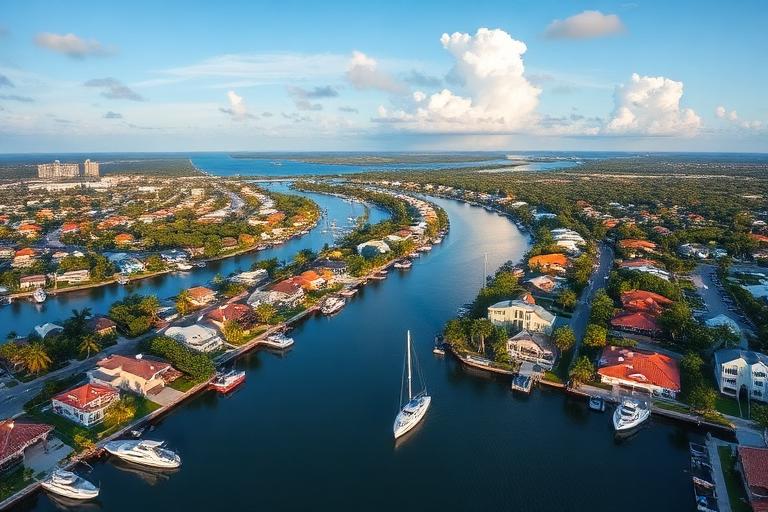
What "Miami vs South Florida" actually means
The phrase is used loosely, so it is worth fixing the geography before anything else. South Florida, as discussed here, means Miami-Dade, Broward and Palm Beach counties. Miami and Miami-Dade form the southern portion of that regional search area. Miami is inside South Florida, not an alternative to it.
So when a buyer asks whether to buy in Miami or in South Florida, the practical question underneath is narrower: should the search stay inside Miami-Dade, or should it also include Broward — which contains Fort Lauderdale among many other communities — and Palm Beach, which contains Boca Raton, Delray Beach and West Palm Beach among others. Those are examples of where a search can extend, not a ranking of where it should.
Widening a search adds options and adds work. It increases the number of communities, property types and individual properties you are comparing, and it stretches the distance between your daily anchors and the places you are viewing. Neither of those is automatically good or bad; they are simply the tradeoff to weigh.
Miami-Dade
Search environments: dense urban condo districts, established single-family neighborhoods, coastal and island areas, suburban communities.
Housing stock: broad mix of condominiums, houses, townhomes and waterfront property, varying sharply by submarket.
Verify: the submarket rather than the county, the specific building or street, ownership costs and any association rules.
Broward
Search environments: urban, suburban, coastal and canal or waterfront communities, including Fort Lauderdale and surrounding cities.
Housing stock: condominiums, single-family homes and planned communities, with community form varying widely across the county.
Verify: municipal and association rules for the exact property, site and insurance circumstances, and the local comparable set.
Palm Beach
Search environments: coastal communities, downtown and suburban areas, and planned residential communities.
Housing stock: a mix of condominiums, single-family homes, planned-community product and coastal or waterfront property by area.
Verify: the specific community and its documents, property condition, ownership costs and travel distance from your daily anchors.
Descriptive only. This comparison does not rank counties or make any claim about relative price levels.
Start with the reason you are choosing a location at all
Search geography is downstream of the life you intend to live in the property. Before comparing counties, it helps to write down the inputs that are genuinely fixed for you and the ones that are flexible:
- Work, family and social ties, and how often you actually need to be near them.
- The daily environment you want — density, walkability, quiet, proximity to water.
- Airport and travel needs, if you travel on a regular schedule.
- The property type you want, because some search areas contain very different mixes of condominiums, houses and waterfront property.
- Private land and outdoor space versus vertical living with shared services.
- Waterfront or boating requirements, where those apply.
- Schools, where relevant to your household — as a research task tied to your specific address options rather than a comparison this guide can make for you.
- How often you would realistically travel between counties once you live there.
None of these make one area superior. They simply determine which compromises you are willing to make, and a search area that ignores them can produce viewings that do not fit the buyer's actual routine or priorities.
What buying in Miami and Miami-Dade can mean
Miami-Dade is not one market. A search here can mean a dense urban condominium district such as Brickell, an established single-family neighborhood such as Coral Gables or Pinecrest, a coastal or island market, or a suburban community well inland. Those are different purchases with different evaluation work behind them.
The practical consequence is that a county-level impression of Miami is too broad for many property-level decisions. What matters is the submarket and the property type inside it, and then the individual property. A buyer who narrows to a specific segment can compare properties meaningfully; comparing Miami as a whole can blend submarkets and property types that a buyer would not treat as direct substitutes. For the urban condominium end of that range, Javier's Brickell condominium guide is a worked example of how much variation sits inside a single Miami submarket.
What expanding into Broward changes
Extending a search north into Broward brings in Fort Lauderdale and a long list of surrounding municipalities, spanning urban, suburban, coastal and canal-front environments. Housing stock and community form vary widely across the county, in much the same way they vary across Miami-Dade.
What a county line does not do is determine value. It changes which properties are in your comparison set, the local rules that apply and the distance from your existing anchors — not whether a given property is well bought. The evaluation work stays the same: the submarket, the property, the ownership costs, the association or site conditions, and the alternatives currently competing with it.
What expanding into Palm Beach changes
A Palm Beach County search can include Boca Raton, Delray Beach, West Palm Beach, Palm Beach and the communities around them. The available mix can include condominiums, single-family homes, planned communities and coastal or waterfront property, depending on the area.
As with Broward, there is no ranking implied here — no county in this comparison is the luxury one, the affordable one or the better one. The relevant change for a buyer is that the search area is further from a Miami-Dade anchor and contains a different set of communities and property options to evaluate on their own terms.
Property type may matter more than the county
Property type can change the ownership structure, due-diligence work and recurring-cost picture independently of the county boundary. Property type determines what you are buying, who governs it, what you owe monthly, what your lender reviews and what due diligence the purchase requires.
If the property-type decision is still open, it is worth resolving before the geography one. The general ownership comparison between condominiums and houses is covered in Javier's condo versus single-family guide, and there is no universally correct outcome there either.
Condominiums across South Florida
Wherever the building is, a condominium purchase means evaluating three things together: the unit, the building and the association. Fees, reserves and assessments where applicable, insurance arrangements, rules and use restrictions, building condition and how a lender treats the project are all building-specific rather than regional characteristics.
That framework travels across a tri-county search; the details do not. Association documents, budgets and local requirements have to be reviewed for the actual building. Javier's guide to buying a condominium in Miami sets out that diligence framework in a Miami and Florida context — useful as a method anywhere in the region, but not a substitute for verifying the rules and documents that apply to a specific building and municipality outside Miami-Dade.
Single-family homes across the region
A house purchase is the structure, the land and the immediate street or micro-location. Age and condition, building systems where applicable, renovation and permit history, lot orientation and privacy all belong to the individual property.
Two assumptions are worth avoiding. The first is that a house has no association: some are subject to an HOA or to deed restrictions, and those need to be read. The second is that a suburban location automatically means more space, lower cost or a better fit. Insurance, flood and site circumstances are likewise property-specific and should be confirmed for the exact address rather than inferred from the area.

Waterfront searches across county lines
If waterfront matters, the county alone is not enough to evaluate the property. Waterfront is site-specific: frontage and orientation, how the site sits relative to the water, water access and route where boating is part of the intended use, and the condition of any seawall, dock or lift that exists. Flood and insurance circumstances attach to the property as well.
Javier's waterfront homes guide sets out that technical diligence in a Miami context. The categories of question travel; the answers, and any local or site requirements, have to be verified for the actual property wherever it sits.
New construction and resale
Both new construction and resale property exist across South Florida markets, and each is evaluated differently: a new-construction purchase involves the project, the developer's contract and delivery terms, while a resale involves an existing structure with a history you can inspect. Neither is categorically better, and this guide makes no claim about which county has more of either.
The process side of a new-construction purchase is covered in Javier's Miami new-construction guide, and current Miami projects specifically sit on his new developments page, which is Miami-focused rather than regional.
Daily travel and practical geography
Regional averages are least useful when the buyer's decision depends on a specific origin-and-destination pattern. Rather than relying on estimates, test the trips your life will actually involve: the commute, the school run, family visits, the airport, healthcare and the places you go every week. Drive them from a candidate address, at the times you would really make them.
A county boundary does not describe the buyer's actual origin-and-destination pattern. Two addresses in the same county can produce completely different weeks, and an address just over a county line can suit a routine better than one closer to home. Testing the actual routes relevant to the buyer provides more decision-specific information than relying on a regional average alone.
Total ownership cost is property-specific
Comparing search areas by asking price alone hides most of what ownership actually costs. For each property genuinely under consideration, build the same picture:
- Purchase price.
- Financing costs, where a loan is involved.
- Property taxes as assessed for that property and owner.
- Insurance, quoted for the specific address and coverage.
- Condominium or HOA fees, where applicable.
- Assessments, where any apply or are pending.
- Maintenance and foreseeable repairs.
- Utilities and services.
- Flood, waterfront or site-specific costs, where relevant.
This is a framework rather than a calculator, and it deliberately produces no county comparison. The point is that the comparison becomes more useful when the recurring and foreseeable ownership costs of each specific property are considered alongside purchase price.
Market evidence has to be local
City and county medians are context, not a conclusion about a property. They aggregate different property types, ages, conditions and locations into one number, and no individual home is the median. Used without segmentation across a tri-county search, broad medians can obscure differences between the specific property types and submarkets being compared.
For a framework for interpreting local figures, Javier's guide to Miami market metrics explains what each measure captures and where it misleads. For current conditions in Miami and Miami-Dade specifically, his Miami market page is the Miami-focused reference — it is not a live market page for Broward or Palm Beach. This article intentionally contains no current market figures of its own.
How to compare two candidate search areas
Rather than scoring counties, compare the two areas across the dimensions that will actually govern your experience of owning there:
- How each location serves your real routine, tested rather than assumed.
- Which property types you can realistically consider in each.
- Total ownership cost for actual properties, not area impressions.
- The inventory and competing demand relevant to your segment while you are buying.
- Local rules, association documents, building conditions and property constraints.
- Insurance, flood and site conditions for the specific addresses.
- The comparable set a future resale would sit in.
- The compromises each area asks of you specifically.
The output is not a winner or a score. It is a clearer view of what each search area would mean in practice, which can help a buyer narrow the geography using the tradeoffs that actually matter to that search.
When broadening beyond Miami-Dade may make sense
These are conditions to recognize, not recommendations:
- The property type you want is scarce in the Miami submarket you had in mind.
- Your routine is genuinely compatible with a location further north.
- A specific property or community outside Miami-Dade fits what you are looking for.
- You want to see alternatives before narrowing, and have time to do it properly.
None of that means the broader region offers more space, lower cost or better value. It means the search area may contain options your current one does not.
When staying focused on Miami may make sense
- Your work, family or daily-life anchor is in Miami-Dade.
- The property type and submarket you want are specifically Miami.
- You want a search that stays manageable and genuinely comparable.
- The options currently available in your segment already meet the requirement.
Again, this is not a claim of superiority. A tighter search area can reduce how many unlike submarkets and property types are being compared at once, which may make the decision easier to evaluate.
Search tools and representation: what covers what
It is worth being explicit about scope. Javier's Miami property search is a live Miami listings tool; it should not be assumed to cover all of Broward or Palm Beach. His buyer representation is Miami-focused work, and nothing here should be read as a claim that he represents buyers throughout all three counties.
If your search settles on a property outside that scope, the buyer should consider working with a qualified professional who has current knowledge of that specific local market. The evaluation principles in this guide still apply; the local knowledge has to be local.
A final checklist before fixing your search area
- Where do I genuinely need to be on a regular basis?
- Which property type actually fits how I want to live?
- Have I tested the real trips from a candidate address, at real times?
- What does total ownership cost look like for the specific options in front of me?
- Which association, HOA or municipal restrictions apply to those properties?
- What do insurance, flood and site conditions look like for those exact addresses?
- How much of my search is truly comparable, and how much is mixing unlike things?
- Am I responding to a county's reputation or to evidence about a property?
- What is the realistic comparable set if I later resell?
- Which compromises am I accepting in each area, and am I comfortable with them?
- What remains unverified, and how will I confirm it before committing?
A sensible next step
- For the full purchase process, read Javier's complete guide to buying a home in Miami.
- To see what is currently available in Miami, use the Miami property search.
- For current Miami conditions, see the Miami market page.
- To have a specific Miami property evaluated and negotiated, see Javier's buyer representation.