How to Buy New Construction in Miami
This guide expands on Javier's Miami buyer representation.
Short answer
Buying new construction differs from buying resale because much of the decision rests on documents rather than a finished property: the developer's purchase agreement, the project documents, written specifications, a projected budget where one applies, and delivery at a future date. Before committing, a buyer should evaluate the developer and project team, the specific residence, the contract and deposit structure, the total cost of the commitment, and the timeline — with contract questions directed to qualified Florida counsel.
Why new construction is a different kind of purchase
In a resale transaction, the property exists. It can be walked, inspected, measured and compared against other properties that also exist. Where the residence sits inside a building, that building has an operating history: budgets that have been adopted, work that has been performed or deferred, fees that have moved in one direction or another over time. The buyer's diligence is largely an exercise in reading a present condition.
In a new-development purchase, particularly one made before completion, more of the decision rests on what has been written down. The plans and specifications describe what is intended. The purchase agreement describes what the developer is obligated to deliver, on what terms and within what schedule. Project documents and any projected budget describe how ownership is expected to work once the building is operating. The residence itself arrives later.
That is not a defect, and it does not make new construction a worse purchase. Some new projects are far along and can be seen in substantial part; some resale properties come with thin records. The point is that the emphasis of the diligence shifts. A buyer who applies resale habits to a preconstruction contract — touring, liking, offering — has skipped the part of the process where the real terms live.
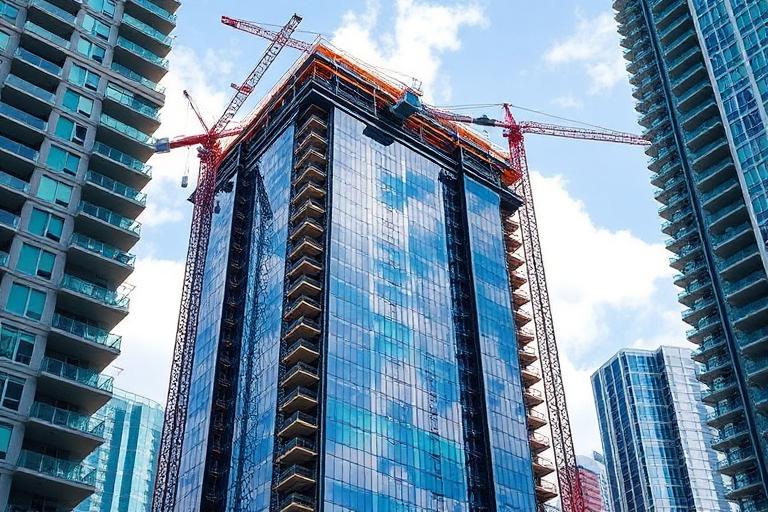
Preconstruction and completed developer inventory are two different situations
"New construction" covers a range of situations, and the two ends of that range call for different work from the buyer.
Buying before completion means committing on the basis of plans, written specifications, project documents and a contract, with delivery at a future date defined by that contract. The residence cannot be inspected in its final state, the association may not yet be operating, and the schedule is set by construction rather than by a closing date you negotiate. The diligence weight sits on the documents and on the developer's ability to deliver what they describe.
Buying completed or near-complete developer inventory means much of what you are evaluating can be seen. Finishes are installed or nearly so, common areas may be operating, and more concrete information about costs and rules is typically available. The transaction is still governed by a developer agreement rather than a standard resale contract, so the reading work does not disappear — but the gap between what is promised and what can be verified is narrower.
Which projects are currently being tracked, and where each stands, is a live question rather than an editorial one. The Miami new developments overview is the place to review current projects; this guide stays with the process that applies to any of them.
Evaluating the developer and the project team
Because a preconstruction buyer is relying on future performance, the question of who is performing matters. The useful approach is not to rank developers, which no article can responsibly do, but to separate what is verifiable from what is presentation.
Track record that can be verified
Previously completed projects, where they are, and what can be confirmed about how they were delivered rather than how they were marketed.
Project team
Who the general contractor, architect and design team are, and whether those relationships are documented for this project.
Permitting and construction status
Where the project actually stands in permitting and construction at the moment you are being asked to commit.
Documented specifications
Which finishes, appliances, systems and amenities appear in the contract documents, and which appear only in renderings or brochures.
Project information made available
What the developer discloses about the project's status and structure, and what your attorney advises reviewing before signing.
Renderings are marketing materials. Written specifications incorporated into the transaction documents are a more authoritative reference, subject to the agreement's terms and any permitted change or substitution rights. When something matters to you — a particular appliance package, a stone, a ceiling height, an amenity, a service level — the question to ask is where it appears in the documents you are being asked to sign.
Reading the developer purchase agreement and project documents
Developer agreements are drafted by the developer. That is ordinary and expected, and it is also the reason the document deserves a careful, unhurried reading — ideally with a qualified Florida real estate attorney, whose job this is. The list below is a reading checklist, not legal advice, and nothing in it substitutes for what your own contract says.
- Deposit schedule and treatment: how many installments, when each is due, what triggers them, and how the funds are held or released under the agreement.
- Delivery and outside-date language: what the contract projects, what extensions it permits, what notice is required, and what happens at any outside date.
- Substitution and change rights: what the developer may change in materials, finishes, layout, common areas or amenities, and on what terms.
- Assignment and resale restrictions: whether the contract can be assigned before closing, and what limits apply to resale afterward.
- Closing obligations: what each side must do at closing and what costs are allocated to the buyer under the agreement.
- Included and excluded items: the specification schedule, read against the model or renderings you were shown.
- Association and projected budget material: where the project has an association, what governing and budget documents are provided and what remains projected.
- Cancellation, default and remedies: as the contract and applicable law provide, for both parties.
If a provision is unclear, the answer is not a summary from a salesperson. It is the language itself, read by someone whose obligation runs to you.
Modeling the deposit structure and the total commitment
Deposit structures are project-specific. What generalizes is the exercise: before signing, map the entire commitment across time rather than reacting to the first number requested.
- The full deposit schedule as written in your agreement, not the first installment alone
- How your liquidity is affected across the entire construction period
- The balance due at closing and whether you intend to finance any part of it
- Closing, title and settlement items that apply to your transaction
- Association contributions or start-up amounts where the project has an association
- Insurance and property tax planning from the point of delivery forward
- Furnishing, window treatments, storage or design items not included in the contract
- A reserve for costs that arrive with the residence rather than before it
A staged deposit schedule can create liquidity pressure if payment dates overlap with other commitments, so the entire schedule should be modeled rather than the first installment alone. Model the schedule your contract actually sets out, and leave room for the possibility that the delivery date moves.
Choose the residence, not just the project
After choosing a project, it can be easy to reduce unit selection to price and availability. The residence is what you live in, and within a single project the differences between one plan and another can be considerable.
- Line and layout: how efficiently the plan uses its area, how rooms relate, and whether the circulation suits how you actually live.
- Exposure and light: which way the principal rooms face and how that reads at different times of day.
- Elevation: what the floor level changes about outlook, light and the sense of the surrounding city — a contextual factor rather than a ranking.
- Outlook and surrounding parcels: what sits nearby today and what is planned or under construction, since sightlines in developing areas can change.
- Terrace and outdoor space: its dimensions, depth and whether it is genuinely usable rather than nominal.
- Position within the floor: proximity to elevators, trash rooms and service areas where that matters to you.
- Parking and storage: how each is assigned, how it is held, and whether it conveys.
Where the project sits in Brickell and you want a closer read on how buildings and residences differ in that district specifically, the Brickell real estate guide covers that evaluation in more detail.

What can change before delivery
Project documents commonly reserve rights to the developer, and construction schedules are subject to factors outside any single party's control. Rather than assuming what will happen, a buyer should understand what the agreement permits: which specifications may be substituted, what may change in the common areas or amenity program, how the schedule may be extended, and how changes are to be communicated.
That understanding is not pessimism. It is the difference between a change that is disappointing and a change that is a surprise. If a particular element is essential to your decision, the time to address it is before signing, in the document.
Financing and appraisal planning
If you expect to finance any part of the purchase, treat the financing as a live item rather than a settled one. A conversation with a lender at the time of contract or reservation reflects the circumstances then; the loan will fund later, under the requirements in place at that time.
- Qualification early in the process does not guarantee terms or approval at a future closing.
- Lender requirements and project-level review criteria can vary by lender, by loan program and by project.
- A valuation or appraisal may be required depending on the financing being used.
- Your own financial position — income, assets, other obligations — will be assessed as it stands at closing.
The practical step is to keep the lender conversation current as delivery approaches rather than reopening it in the final weeks.
Condominium diligence at or near delivery
Where the project is a condominium, more concrete information generally becomes available as delivery approaches. What to review at that point includes the association's projected or initial budget and what it funds, insurance information where it is available, the rules governing use, leasing and occupancy, how parking and storage are handled, and the completion and inspection documentation relevant to your transaction.
Read what exists, and note where a figure is still a projection rather than an adopted budget. The deeper mechanics of reviewing condominium documents, budgets and reserves are covered in the Miami condo buying guide, which applies to a new building once it is operating just as it does to an established one.
New-construction single-family and spec homes
Not all new construction is vertical. Buying a newly built or under-construction house shifts the diligence away from association documents and toward the property itself.
- Completed versus under construction: a finished home can generally be examined as it stands; a home still being built involves the same document-led reliance as a preconstruction condominium.
- Permits and approvals: what has been permitted, what approvals apply and what documentation exists for the work performed, confirmed for that specific property.
- Independent inspection: the scope worth arranging depends on the project and its stage, and is best scoped with your inspector rather than from a standard list.
- Site conditions: grading, drainage and elevation, which matter in parts of South Florida and are easier to assess before landscaping is complete.
- Builder warranty: its terms exactly as written, including what is covered, for how long and how claims are made.
- Waterfront elements: where a dock, seawall or shoreline structure is involved, the related approvals and documentation deserve their own review.
Managing the period between contract and delivery
The interval between signing and delivery carries ongoing contractual and planning obligations, so it should be managed as an active part of the purchase rather than treated as passive waiting. A few habits make it manageable.
- Track the contract milestones and deposit notices, and diarize each due date.
- Complete design selections, where the project offers them, within the windows provided.
- Revisit financing and insurance planning periodically rather than once at the outset.
- Read formal developer communications carefully; notices delivered under the contract carry consequences that emails from a sales office may not.
- Keep a written record of any material change to specifications, schedule or scope.
- Route contract questions to your attorney rather than resolving them informally.
Pre-delivery inspection and closing preparation
Depending on the project and the contract, a buyer may have a walkthrough, pre-delivery inspection or orientation before closing. Where such a right exists, use it deliberately: document visible issues and punch-list items in writing, and understand the written process for how unresolved items are addressed and on what timeline.
In parallel, confirm the closing logistics with the professionals involved — funds and financing, insurance in place as required, title and settlement arrangements, and the practical questions of access, utilities and move-in. What a developer is obligated to correct, and when, is a function of the contract rather than of expectation.
New construction and resale, compared honestly
Neither path is categorically better; they simply trade different certainties. New construction can offer newer systems and current specifications, with a delivery date in the future and a decision made substantially on documents. Resale offers a property that can generally be inspected in its present condition, with operating history for the building or home, and a timeline that is usually shorter and more predictable.
The question is which uncertainty you would rather carry: the condition of something you can see, or the schedule and delivery of something you cannot yet. For the general mechanics that apply to either path — offer, contract, diligence, closing — the Miami buying process guide is the broader reference.
Questions worth asking before you commit
Take these to the sales office, to your attorney and to your lender. The answers should come from documents rather than from reassurance.
- Who is the developer, and who are the contractor and design team on this project?
- What is contractually documented as included in the residence, and what is illustrative only?
- What is the current permitting and construction status of the project?
- What is the deposit schedule, and how are deposits held or released under the agreement?
- What does the contract say about projected delivery, extensions and any outside date?
- What rights does the developer have to substitute materials, finishes or specifications?
- What restrictions apply to assignment or resale before closing?
- Is there a projected or initial association budget, and what does it include?
- What is my total expected commitment beyond the purchase price?
- What sits on the parcels around this residence, and what is planned or under construction nearby?
- How are parking and storage assigned, and do they convey with the residence?
- What do the rules say about leasing, occupancy and use?
- What is my financing plan at delivery, and what will the lender require then?
- What pre-delivery inspection or punch-list process does the contract provide?
Choosing your next step
Where you go from here depends on which question you are trying to answer.
- To review projects currently coming to market, see Miami new developments.
- To weigh resale alternatives at the same time, use the Miami listing search.
- For the general mechanics of a Miami purchase, read the Miami buying process guide.
- For condominium documents, budgets and reserves, read the Miami condo buying guide.
- To have someone compare projects, residences and agreements alongside you, Javier offers buyer representation in Miami.