Best Areas in Miami for International Real Estate Investment — How to Compare
This guide expands on Javier's Miami buying advisory.
The Short Answer — There Is No Universal Best
No Miami area is universally best for an international buyer, and any page that tells you otherwise is selling you something. The area that fits depends on criteria only you can set: how you intend to use the property, what property type suits your management model, how long you plan to hold, and how much risk and hands-on involvement you will accept. This guide gives you the framework to compare areas on those terms.
Separate Area Choice from Legal, Tax and Financing Questions
Choosing an area is a property-and-use decision. The legal, tax and financing dimensions of an international purchase are separate workstreams with their own rules — and their own guides here:
- Ownership eligibility and legal screening: can foreigners buy property in Miami.
- Financing options and underwriting: financing options for foreign buyers.
- Tax orientation across the ownership lifecycle: taxes for foreign property buyers in Florida.
- The remote purchase workflow: buying from outside the US.
Resolve those with the qualified professionals each requires; this page stays on the area-comparison question.
The Comparison Framework
Build a written criteria list and test every candidate area — and then every candidate property — against it:
- Intended use — primary home, second home, long-term rental or another lawful use.
- Property type — condo, single-family house, waterfront, or new construction.
- Remote-management burden — how much the property demands when you are abroad.
- Association and municipal rules — building-specific and city-specific, including rental flexibility where relevant.
- Maintenance intensity — what the property type and setting require to own well.
- Access — transportation and services you personally value.
- Building and association diligence — for condos, the financial and physical condition of the building.
- Flood, insurance and waterfront exposure — address-level, never area-assumed.
- Market depth — how many comparable properties and transactions exist, as a fact about choice rather than a performance prediction.
- Holding horizon and exit flexibility — how easily you could change course, without forecasting returns.
Neutral Area Examples — Context, Not Rankings
The examples below describe housing stock, use patterns and management differences only. No order is implied, and none is "better" — each fits different criteria.
Brickell
Miami's urban financial district, with condo-dominant inventory in high-rise buildings. For an international owner that means building-specific association and rental rules, full condo diligence, and a management model that leans on the building — which some absentee owners prefer.
Miami Beach
A separate municipality offering condos, single-family homes and waterfront properties in one market. Building-level and municipal rental rules must be verified for the specific address, and waterfront or low-lying properties call for property-specific flood and insurance diligence.
Coral Gables
A separate municipality that is more single-family and lot-oriented in many sections, alongside condominium inventory. Houses here imply a different maintenance and management model than a condo — relevant if you will own from abroad.
Coconut Grove
A City of Miami neighborhood mixing single-family homes, condos and waterfront property. The variety means maintenance burden and building differences are property-specific — compare the individual property, not the neighborhood label.
Edgewater
A condo-heavy bayfront and urban area north of downtown. As with Brickell, the diligence is building-specific: association finances, rules and condition vary from tower to tower.
Sunny Isles Beach
A separate municipality — not part of Miami Beach — with oceanfront, condo-heavy inventory. Building and municipal rules must be verified locally, and oceanfront ownership adds its own exposure considerations.
Condo Building vs Single-Family — The Ownership Burden Decision
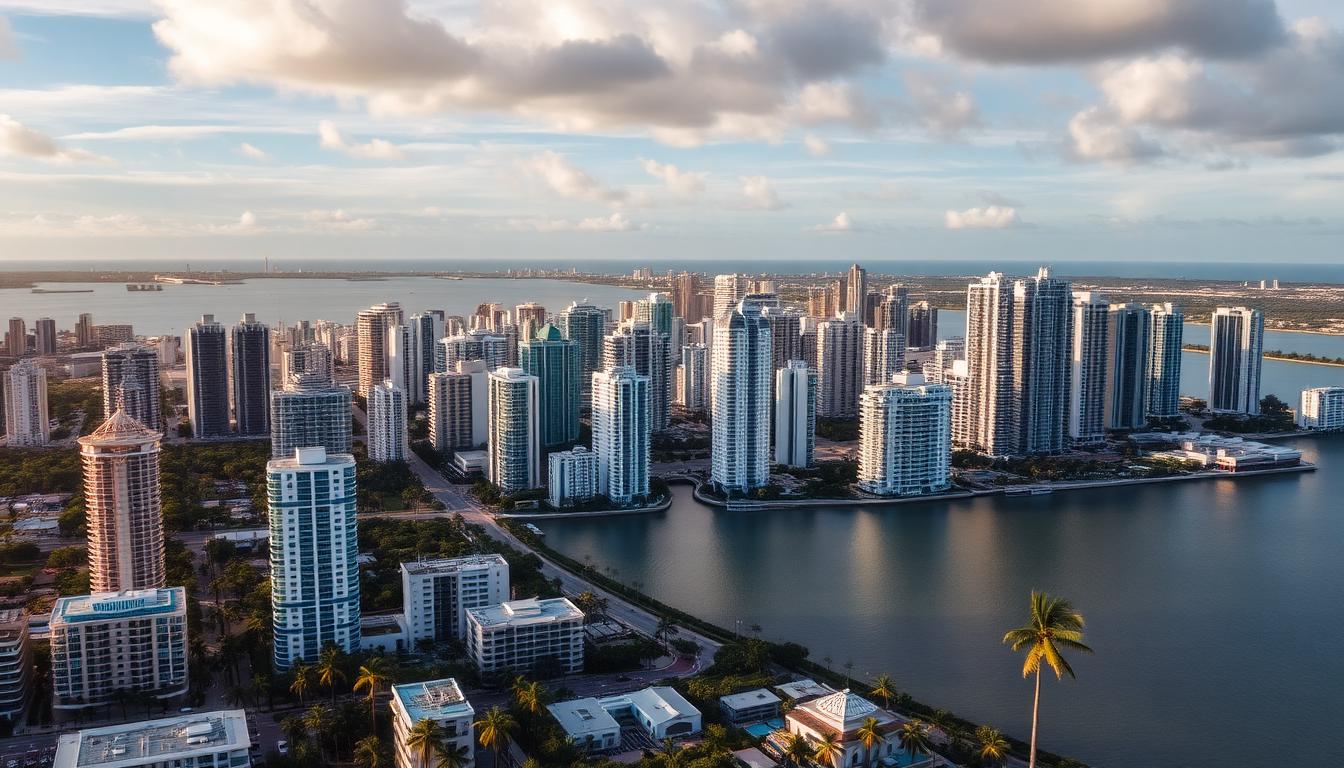
For an owner abroad, this is often the pivotal choice. A condo moves exterior and structural upkeep to the association — at the cost of fees, rules and the need for building-level diligence. A house concentrates control and responsibility in you: all maintenance, and in some areas lot, landscape or waterfront upkeep, must be arranged and supervised remotely. Neither is universally easier; the question is which burden fits your management capacity.
Rental Flexibility — A Legal and Building-Specific Factor
Whether you can lease a property, and on what terms, is set by the association's documents and the municipality's rules — minimum lease terms, waiting periods, lease caps and local regulations all vary. If leasing is part of your plan, verify the rules for the specific building and address before buying. This framework treats rental flexibility as a yes/no/how constraint to verify, not a return to project.
Remote Management — Questions to Answer Before Buying
- Who handles day-to-day issues and emergencies while you are abroad?
- How do association or municipal notices reliably reach you?
- What recurring maintenance does this property type require, and who performs it?
- How are inspections, repairs and expenditures authorized in your absence?
- What does the property cost to operate when you are not there?

Exit and Liquidity — A Framework Without Forecasts
Plan for the eventual sale without predicting it. Ask how broad the future buyer pool is for this property type in this area, how much comparable inventory typically exists, whether anything about the property's use or condition narrows resale options, and whether your holding horizon can absorb a slower sale if one occurs. Market depth is about how much choice and comparable evidence exists — it is not a promise about resale performance.
Area-Comparison Checklist
- Intended use defined — primary, second home, rental or other lawful use?
- Property type matched to my remote-management capacity?
- Association and municipal rules verified for the specific building and address?
- Maintenance intensity understood for this property and setting?
- Flood, insurance and waterfront exposure checked at the address level?
- Access to the transport and services I actually use?
- Market depth assessed as comparable inventory, not a forecast?
- Holding horizon and exit flexibility planned?
- Legal, tax and financing questions delegated to their own guides and professionals?
Next Steps
Explore area and lifestyle context in Miami communities, review live inventory in Miami listings, and for representation through the purchase, see buying services.