The Residences at Mandarin Oriental, Miami — Buyer's Guide
This guide expands on Javier's Miami buying advisory.
Verified Project Snapshot
The following facts come from Swire Properties and the official project website:
- Location: Brickell Key, an island adjacent to Miami's Brickell district.
- Structure: a two-tower development by Swire Properties.
- South Tower: official project materials describe 66 stories and 228 Mandarin Oriental branded residences; Swire describes the tower at approximately 800 feet.
- North Tower: planned to include the new North American flagship Mandarin Oriental hotel plus private residences.
- Amenities: a resort-style podium with over 100,000 square feet of amenities, per Swire and the project site.
- Site status: former hotel closed May 2025; controlled demolition reported April 12, 2026.
Note that the project's current sales gallery address is not the future residence postal address; confirm the final address in the offering documents rather than assuming it.
South Tower vs. North Tower
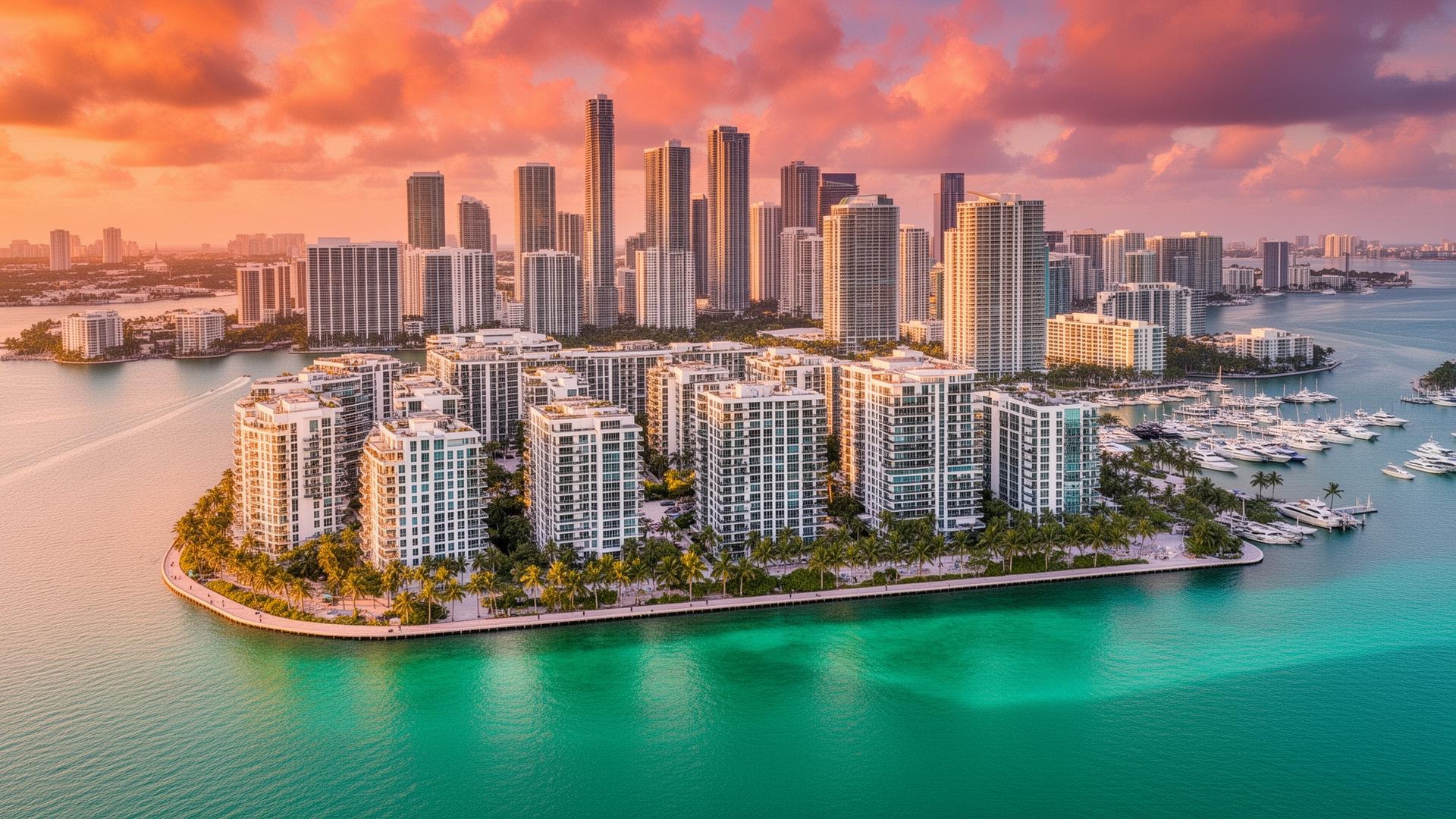
The South Tower is the residential component described in current official materials: 66 stories and 228 branded residences. The North Tower is planned around the Mandarin Oriental hotel — the brand's new North American flagship — plus private residences. Because official materials have evolved as the project progresses, avoid relying on unit counts or program details for the North Tower unless they appear in the current offering documents you actually review.
Design Team and Residences
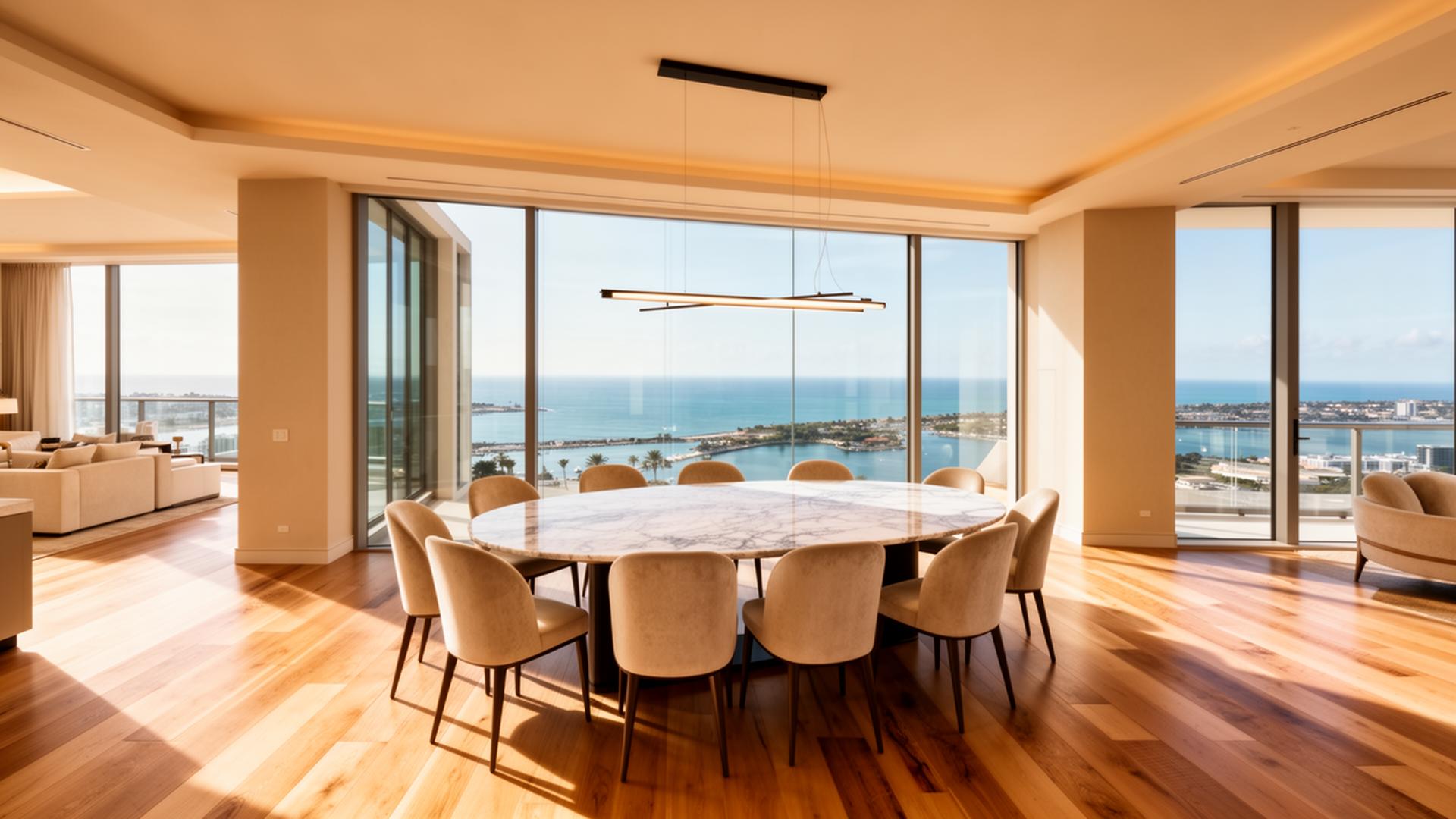
Official materials identify Kohn Pedersen Fox (KPF) as architect and Tristan Auer as the interior designer for the South Tower. Beyond that, treat any statement about specific finishes, ceiling heights, elevator configurations, or views as applying only where the current contract documents say so. Marketing descriptions of "typical" residences do not guarantee that every residence shares the same specifications — verify the exact unit, floor plan, exposure, and specification schedule for the residence you are considering.
Official Amenity Program
The official amenities and services page and Swire describe a resort-style podium with over 100,000 square feet of amenities, with high-level categories spanning wellness, dining, and waterfront-oriented spaces. Amenity programs in under-development projects can change before delivery, and access rules, reservation policies, and service levels are only settled in the final association and program documents. Treat the amenity descriptions as direction, not delivery commitments.
What "Target 2030" Actually Means
The project's current official construction update targets completion in 2030 as of its 2026 update. That is a target, not a promise. Construction schedules can move earlier or later, and the purchase contract — not the marketing timeline — defines the delivery standard, any outside dates, and the remedies if timing changes. Never build financing, housing, school, or relocation plans around a specific completion date for an under-development project.
What to Verify Before Contract
In a pre-construction purchase, the developer's contract and current offering documents control nearly everything that matters. There is no universal deposit percentage, cancellation right, or set of buyer protections you can assume — each project defines its own terms. Before signing, review with qualified counsel as appropriate:
- Deposit schedule, deadlines, escrow arrangements, and what triggers default.
- Cancellation rights — yours and the developer's — and the remedies on either side's default.
- The developer's rights to change designs, specifications, finishes, and amenities.
- The contractual definition of delivery and what happens if the timeline moves.
- The exact unit, floor plan, exposure, and specification schedule attached to your contract.
- Projected association budget and fees, plus assignment, resale, rental, and use rules.
- Closing costs, and any warranty and turnover information in the offering materials.
For the general pre-construction process, see the guide on buying new construction in Miami.
Construction and Developer Risk
An experienced developer can reduce some risks, but no developer eliminates them. Pre-construction purchases carry construction risk, market risk between contract and delivery, financing risk at the future closing date, and contract risk embedded in the specific terms you sign. Due diligence means evaluating each of those for this project and this contract — not relying on brand reputation as a substitute.
Financing for a Future Delivery
Financing that exists today cannot be assumed at a closing years away. Lender programs, qualification standards, project-approval criteria, and your own financial picture are all evaluated at the time you actually finance. A prudent plan treats the future financing terms as unknown and stress-tests the purchase against less favorable scenarios. International buyers can review the foreign-buyer financing guide for how lender underwriting differs for non-resident borrowers.
Current Pricing and Availability
This page deliberately does not publish prices, price-per-square-foot figures, or availability. For an under-development project those are unit-specific and change as the developer releases inventory. Obtain current pricing, floor plans, and availability from the developer's current materials or through your buyer's representative, and browse the Miami new developments page for current project discovery.
Comparing Branded and New-Construction Alternatives
Miami's pipeline includes other branded and unbranded new-construction projects that differ in location, development status, property type, and service model. Compare alternatives on those neutral dimensions — plus contract terms, projected association costs, and your intended use — rather than on expected returns. No project comparison can predict which will perform better financially, and this page provides no investment advice.
Buyer's Checklist
- Read the full contract and current offering documents with qualified counsel.
- Confirm the exact unit, floor plan, exposure, and specification schedule in writing.
- Understand the deposit schedule, deadlines, and default remedies before wiring funds.
- Know the developer's change rights and the contractual delivery definition.
- Review projected association fees and the assignment, resale, rental, and use rules.
- Treat the 2030 target as a target; plan without depending on a fixed date.
- Do not assume today's financing will exist at the future closing.
To review this project or compare it with current alternatives, contact Javier G. Ramirez, or start from the Miami buying advisory framework.