Miami Beach Real Estate Market Overview
This guide expands on Javier's broader Miami market conditions.
Short answer
Miami Beach is not one uniform market. Conditions can differ by submarket, by property type, by building or street, by view and waterfront position, by condition, by association and building status, by the inventory currently competing and by price range. Broad Miami Beach averages are context, not a conclusion about a specific property. This page applies market analysis to Miami Beach and its submarkets. For what the individual metrics measure, see Javier's guide to reading Miami market trends; for broader current Miami conditions, see his Miami real estate market page; and for neighborhood and lifestyle orientation, see the Miami Beach community guide.
Why Miami Beach is not one real estate market
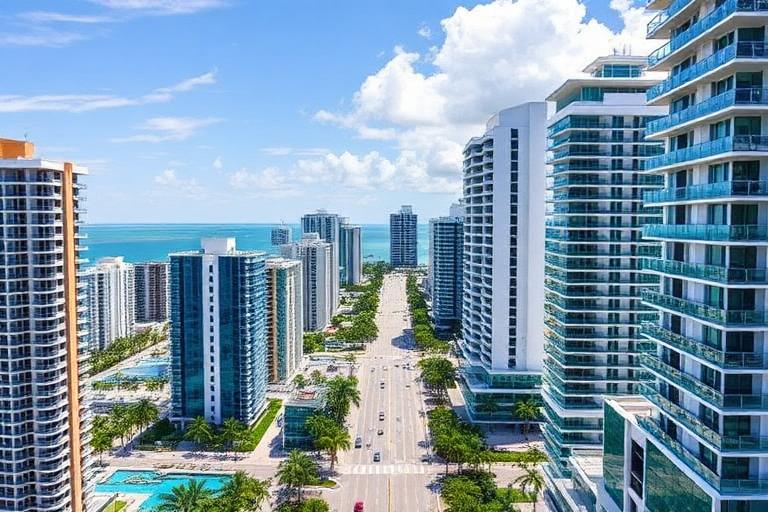
The phrase "the Miami Beach market" covers a barrier island city containing several genuinely different competitive sets. Oceanfront condominium buildings along Collins Avenue compete largely with each other. Interior condominium buildings a few blocks west compete with a different pool of buyers at different price points. Single-family houses on residential streets are a separate market again, and waterfront homes on the islands and bayfront streets are separate from those. New construction, where it exists, introduces yet another product with its own buyer.
When those sets are blended into one statistic, the result describes an average of things that do not compete with each other. It can move because the mix of what sold changed rather than because anything about a particular property changed. That is not a flaw in the data; it is a limit on what the data was ever measuring.
The practical alternative is to work down a hierarchy, narrowing at each step until you reach something that actually bears on the property in question.
- 01Miami BeachThe city as a whole — useful as background, never as a conclusion.
- 02SubmarketSouth Beach, South of Fifth, Mid-Beach, North Beach, the island and waterfront home areas.
- 03Property typeOceanfront condominium, interior condominium, single-family home, waterfront home, new construction.
- 04Building or streetFor condominiums the building; for houses the street and immediate location.
- 05Property characteristicsFloor, exposure, view, layout, condition, parking, lot, frontage.
- 06Current competitionThe listings a buyer would genuinely weigh against this one, right now.
- 07Recent comparable salesWhat genuinely similar properties actually closed at, and on what terms.
How this overview differs from the general market-metrics guide
This page is about Miami Beach specifically: how its submarkets are structured, why the building matters so much here, and how to narrow a broad figure down to something local and usable. It does not re-explain what each metric is. If you want the definitions — what a median actually measures, how inventory and months of supply are constructed, what days on market does and does not establish, how to read price reductions — those belong in Javier's guide to reading Miami real estate market trends. The sections below assume that groundwork and apply it locally.
How to read Miami Beach price statistics
A median or average reported for Miami Beach summarizes a group of transactions. It is a description of that group over that period, not a value attached to any address within it. Because the city contains such a wide spectrum of product, the composition of what sold in a given period influences the figure considerably — a period weighted toward oceanfront sales and a period weighted toward interior condominium sales will not produce comparable summaries even if nothing about individual properties changed.
Price per square foot is treated locally as a comparison aid, not a valuation method. Between similar units on similar floors in the same building it isolates size reasonably well. Across dissimilar Miami Beach properties it flattens everything that actually distinguishes them: exposure and view, floor, renovation level, layout efficiency, parking, the building's condition and services, and waterfront position. Two properties showing the same figure per square foot can be entirely different propositions.
Asking prices are also not values. An asking price is a seller's position at a moment in time, informed by advice of varying quality. Recent genuinely comparable closed sales are an important source of price evidence, read alongside current competition and property-specific factors. When the question narrows to what one specific property is worth, that is a property-specific valuation rather than a market-statistics exercise.
Inventory and current competition in Miami Beach
Inventory only becomes meaningful after it is segmented. A count of everything available across the city includes properties that will never compete with each other. What matters to a buyer or a seller is the far smaller set that shares the submarket, the property type, the price band, and — for condominiums — often the building itself.
In a condominium building with several similar units available at once, those units are the immediate competition, regardless of what the citywide picture looks like. On a residential street where very little comes available, the relevant comparison may extend to nearby streets or to properties with similar characteristics elsewhere in the same submarket. Defining the relevant competitive set is one of the most useful analytical steps because it removes listings that a buyer would not realistically treat as substitutes.
This overview deliberately does not quote inventory counts, because they change and because a stale count is worse than none. Live availability belongs in a current property search.
Days on market and how a listing is being received
Days on market is a context signal in Miami Beach, not an explanation. It tells you how long something has been available under a particular dataset's counting rules; it says nothing on its own about why. The useful follow-up questions are local: what was the original asking price relative to the competitive set, has it been repositioned since, what condition is the property in, what is the building or street like relative to alternatives, and what else a buyer at that price could choose instead.
Two listings with identical days-on-market figures can tell opposite stories — one priced ambitiously in a thin competitive set, another with a specific characteristic that narrows its buyer pool. Read the figure alongside the property, never instead of it.
Why property type changes the analysis
Condominiums
A condominium is read from the outside in: the building first, then the association and the building's condition, finances, fees, assessment history, insurance arrangements and rules where they apply, and only then the unit — its floor, view, exposure, layout, condition, parking and the other units currently competing with it inside and outside the building. Two units with the same square footage in the same submarket can be very different purchases because of what sits above the unit level.
Single-family homes
A house is read as house plus land plus location: the street and its immediate setting, the lot and its orientation, the condition and architecture of the structure, privacy, and the houses currently competing for the same buyer. Where no HOA or other association governs the property, exterior and site responsibility sits directly with the owner; where an association exists, its fees, responsibilities and rules remain part of the analysis.
Waterfront homes
Waterfront properties add site-specific variables — frontage, orientation, access and the particular conditions of the site — that are not visible in any summary statistic and cannot be inferred from an address. The technical diligence involved is covered separately in Javier's Miami waterfront homes guide.
New construction
Newly built product is a different competitive proposition from resale, with different delivery terms and a different buyer profile. Where a new project targets the same buyer as existing inventory, it adds alternatives to that buyer's list. Whether that changes any particular outcome is project-specific and not something an overview can predict.
Condominium analysis
Building, association and building condition, then unit-level characteristics, then the units competing with it. The building is part of the purchase.
Single-family analysis
Street and location, lot and site, structure and condition, then the houses competing with it. Exterior responsibility sits with the owner.
The broader question of which ownership type suits a given buyer is addressed in Javier's condo versus single-family comparison.
Why the building matters in Miami Beach condominium analysis
This is a point where broad Miami Beach data can be misread if building-level differences are ignored. The city's condominium stock spans a wide range of construction eras, scales and formats, and buildings standing within sight of each other can be materially different purchases. Age and construction, the condition of the building and its systems, the association's finances and reserve position, assessment history, insurance arrangements, parking provision, rules and services, and how many comparable units happen to be available inside the building at that moment all bear on both cost of ownership and marketability.
Because of that, a submarket-level condominium statistic can be a poor guide to a specific building, and a building-level pattern can diverge from the area around it. The practical sequence is to establish the building before analysing the unit, and to treat association documents and financials as primary evidence rather than paperwork. The building-level and document-level process is set out in Javier's guide to buying a condo in Miami.
How waterfront changes the Miami Beach market read
Waterfront in Miami Beach is not one category. Oceanfront positions, bayfront positions and canal positions are different environments with different exposures, different views and different practical characteristics. Within each, the individual site governs: orientation, frontage, any dock or seawall arrangements where they exist, access, and conditions particular to that parcel or that building's position.
None of that can be assumed from a general description or from the fact that a property is described as waterfront. It has to be verified property by property, and the technical side of that verification is covered in the waterfront diligence guide.

Miami Beach submarkets: how they are structured
The descriptions below are structural rather than comparative. They are intended to help you identify which competitive set a property belongs to, not to rank areas against each other. For place, lifestyle and orientation, see the Miami Beach community guide.
South Beach
The southern portion of the island has a condominium-heavy residential stock that varies widely in age, scale and architectural style — from historic low-rise buildings to larger contemporary ones. Because that variation sits within one area name, building, unit and micro-location do most of the analytical work here. Two properties a short walk apart can belong to entirely different competitive sets.
South of Fifth
The part of South Beach south of Fifth Street. It is a compact, condominium-heavy area with a defined boundary and a concentrated set of buildings. Depending on the property, the relevant comparable set can be narrower, making building-to-building and unit-level differences especially important in any read of the data.
Mid-Beach
A mixed area combining oceanfront condominium buildings along the Collins Avenue corridor with residential streets and waterfront houses on the bay side. Those are different products with different buyers, so Mid-Beach figures generally need separating by property type and then by building or street before they describe anything usable. Treating the area as one dataset blends two distinct markets.
North Beach
The northern portion of the city, with a distinct building stock that includes a notable concentration of mid-century condominium buildings alongside oceanfront product, residential areas and some newer projects. The breadth of that mix is precisely why blended North Beach numbers are difficult to interpret: buildings of different eras carry different condition, association and buyer-pool characteristics. Segment by property type, building era and price band first.
Island and waterfront home markets
Miami Beach also contains several island and waterfront residential enclaves — Star, Palm and Hibiscus Islands, the Sunset Islands, the Venetian Islands and the La Gorce area among them. These are distinct environments from one another in access, scale, lot patterns and housing stock, and they should not be described interchangeably. Characteristics such as access arrangements, frontage and water access vary and need to be verified property by property rather than assumed from the name of the island.
A note on neighbouring municipalities
Surfside, Bal Harbour, Bay Harbor Islands and Sunny Isles Beach are separate municipalities, not part of Miami Beach, even though they are often grouped with it in conversation. When comparing figures, it is worth confirming which geography a dataset actually covers, because loosely defined "Miami Beach area" data sometimes includes them and sometimes does not.
How new construction can affect the local competitive set
Where a new or recently delivered project targets the same buyer as existing inventory, it adds alternatives to that buyer's shortlist and therefore belongs in the competitive analysis. Where it targets a different buyer, price band or format, it may have little bearing on a particular resale property at all. That is a project-by-project judgement, not a general rule, and no outcome should be assumed from the presence of new supply.
Current projects can be reviewed through Javier's new developments overview, and the mechanics of purchasing new construction are covered in his new-construction buying guide.
Building condition, reserves and assessments: what to establish
For any Miami Beach condominium, the building's physical condition, the association's financial position and reserve arrangements, its inspection status, its insurance arrangements and any current or anticipated assessments can affect both the ongoing cost of ownership and how readily a unit trades later. These are building-specific matters. Their scale varies enormously between buildings, which is why this overview does not attach figures to them.
Requirements applying to a specific building under current Florida and local rules should be verified for that building, with the association's documents, financial statements and any inspection or engineering reports reviewed directly during the diligence period. The practical sequence for obtaining and reading that material is set out in the Miami condo buying guide.
What the Miami Beach market means for buyers
The useful questions are narrow ones:
- What is the relevant inventory for this property type in this submarket?
- Which listings would a buyer genuinely weigh against this one?
- What have comparable properties recently sold for, and on what terms?
- How long have comparable listings been active, and were any repositioned?
- For a condominium, how does this building differ from the alternatives?
- For a house, how do the lot, street, waterfront position and condition compare?
- Is the asking price positioned fairly against those alternatives?
Answering those questions for specific properties, and negotiating on the basis of the answers, is what buyer representation is for.
What it means for sellers and owners
Broad Miami Beach statistics establish background, and they are worth knowing. They do not set a price. What determines positioning is the specific competitive set — the listings a buyer will actually compare against yours — together with recent comparable sales in the same building, street or segment, and your property's own condition and characteristics relative to those alternatives.
Converting that competitive picture into a defensible number is the purpose of a home valuation, and taking the result to market is where seller representation applies.
How to evaluate one specific Miami Beach property
Reuse the hierarchy above rather than starting from a citywide figure. In sequence: establish the submarket, then the property type, then the building or street, then the property's own characteristics, then the inventory currently competing with it, then the recent comparable sales, and finally the property's position relative to all of it. Each step discards data that was never relevant to the decision.
By the last step you are no longer reading the Miami Beach market at all — you are reading one property against a defined set of alternatives, which is the level where a price decision becomes property-specific rather than market-wide.
Where to find current information
This overview is written to stay accurate over time, which is why it contains no price, inventory or activity figures. Those figures change, and stale data presented as current can mislead. For the current picture, use sources maintained for that purpose:
- Broader current Miami conditions are covered on Javier's Miami real estate market page, which addresses the wider market rather than Miami Beach alone.
- Live availability belongs in the Miami property search.
- Recorded ownership and prior transfer information for a specific address is public through the Miami-Dade County Property Appraiser.
- What the underlying metrics measure is explained in the Miami market trends guide.
Where to go from here
- If you are buying in Miami Beach, Javier's buyer representation applies this analysis to specific buildings and properties.
- If you want to know what one property is worth, request a home valuation.
- If you are selling, his seller representation turns the competitive set into a pricing and marketing plan.
- For live inventory, use the Miami property search.
- For place and neighborhood context, see the Miami Beach community guide.