How to Sell a House in Miami for Maximum Value
This guide expands on Javier's seller representation in Miami.
How do you sell a Miami home for maximum value?
Not by choosing the highest asking price. Maximum value comes from establishing a defensible initial market position supported by real evidence, preparing and presenting the property deliberately, launching it only when everything is ready, interpreting buyer response accurately rather than emotionally, comparing offers on their full terms and net proceeds rather than headline price, and negotiating and executing through closing with discipline. Each stage either protects the final number or quietly erodes it.
What Actually Determines a Miami Home's Sale Outcome
Sellers often describe the goal as "getting the best price." A more useful way to frame it is the best outcome the property can defend — a result supported by evidence, achieved on terms that actually close. Five inputs shape that outcome, and only some of them are within a seller's control.
The first is closed comparable sales: what buyers have recently paid for properties genuinely like yours. The second is current competing inventory: what a buyer can choose instead of your home at this moment, at a similar number. The third is the property itself — condition, layout, characteristics, documentation, and any factor a buyer will discover during diligence. The fourth is the prevailing market environment, which is a backdrop rather than a lever, and which is covered separately in Javier's overview of the current Miami real estate market. The fifth is the buyer pool: who realistically buys this kind of property, and how they are reached.
It is worth separating three ideas that sellers frequently merge. The asking price is a marketing decision. The defensible market position is the range the evidence will support under scrutiny. The final negotiated result is what a specific buyer agrees to on specific terms. A seller can influence all three, but only the first is set unilaterally — and setting it without regard to the other two can weaken the seller's position before negotiation begins.
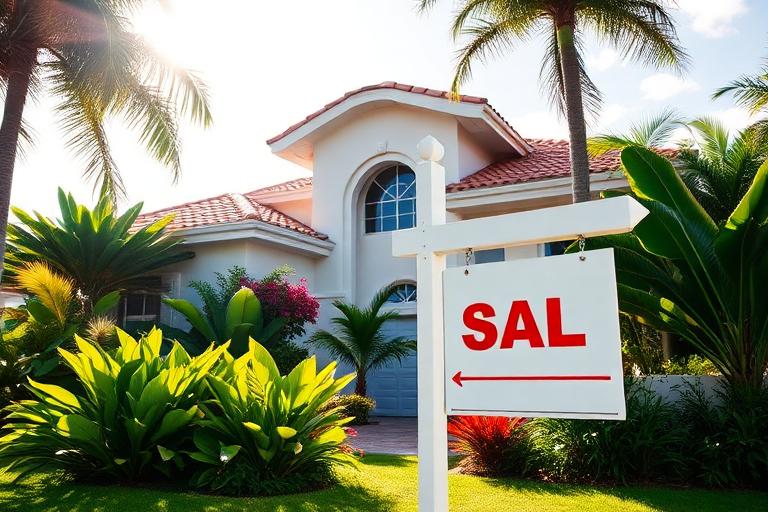
How to Price a Miami Home for Maximum Value
Pricing is not a single decision; it is a sequence of judgments, each of which can be examined. Working through it in order is what makes the eventual number defensible.
Start with genuinely recent comparable sales
Closed sales provide direct evidence of what buyers actually paid. The word that matters is genuinely: similar property type, similar location, similar condition, similar size and similar characteristics. A sale two blocks away with a different view, a different lot, a different level of finish or a different building is context, not a comparable.
Compare the competition a buyer can choose instead
Closed sales explain the recent past; active and pending listings explain the decision in front of the buyer today. Your home is judged against what is available at the same moment, not against what sold last season. If a buyer at your number has a visibly better option, your position is the problem, not the buyer.
Adjust for what is actually true of the property
Condition, age and state of the roof, systems and finishes; layout; light and exposure; outdoor space; parking; noise; view; permit history; and for association properties, fees and building information. Adjust for what a buyer will find, not for what the seller hopes will be overlooked.
Understand the likely buyer pool
A primary-residence buyer, a second-home buyer, a renovator and a buyer relocating from outside the area evaluate the same property differently and are reached differently. Knowing who is realistically going to buy the home shapes both the position and the presentation.
Set an initial market position you can defend
The asking price is an opening position that must survive scrutiny from buyers, their brokers and, where financing is involved, a lender's valuation process. A position supported by evidence invites engagement. A position that cannot be explained invites silence.
Two adjacent resources belong here and nowhere else in the process. For a number specific to your property rather than a framework, request a Miami home valuation. For the wider conditions your sale takes place within, read the Miami market overview. This guide is about method; those pages own the number and the conditions respectively.
Why Overpricing Reduces Seller Leverage
Overpricing is rarely punished immediately, which is what makes it dangerous. In the beginning it looks like optimism. What it actually does is remove the property from the comparison set of the buyers most likely to purchase it. Those buyers are searching within a range, evaluating options against each other; a home positioned above the evidence tends to be seen not as a bargain waiting to be discovered but as the option that makes the others look reasonable.
The second cost is exposure. A property that remains available while its competition transacts accumulates visible market history, and buyers who arrive later tend to arrive with questions rather than enthusiasm. The third cost is the repositioning itself. A price adjustment made after the initial attention has dissipated does not restore the launch — it re-enters the market with less momentum and a weaker negotiating posture than the same number would have carried at the start.
None of this reduces to a rule about a specific number of days or a specific percentage. It is a directional dynamic, and the practical conclusion is simple: an evidence-based initial position can give the seller a stronger starting point before the property goes live.
What to Repair or Improve Before Listing
The honest starting point is that no renovation guarantees a return, and no category of work is universally "the best investment." What exists instead is a hierarchy of risk and clarity.
Defects and deferred maintenance
Issues that affect buyer confidence — active leaks, visible water damage, systems that do not function, evident deferred maintenance — tend to be the most defensible things to address, because buyers routinely price unknown problems more harshly than known ones. Unresolved items also reappear during inspection, where the conversation happens on the buyer's terms rather than the seller's.
Modest cosmetic preparation
Cleaning, paint touch-ups, decluttering, tidy landscaping, functioning lighting and minor repairs are inexpensive relative to their effect on how clearly a property reads. They do not transform a property; they remove distractions that cause buyers to under-read it.
Major renovations
Large projects undertaken specifically for resale carry cost, time, permit and finish-preference exposure. A buyer may not value your choices, and the work may delay the listing past the moment that suited it. Where a major project is genuinely warranted, it should be a deliberate decision with a clear rationale, not a reflex.
When as-is is the stronger position
If the work required is substantial, if the likely buyer intends to renovate regardless, or if the seller cannot practically manage a project, as-is may produce the better outcome. The requirement is consistency: price, presentation and disclosure should all reflect an as-is property rather than implying otherwise.

How to Prepare and Present the Property
Presentation does not change what a property is. It changes how accurately a buyer can perceive it — and imprecise perception is expensive for a seller.
Where the property has a street presence, the approach and entry are the first calibration a buyer makes. Inside, the objective is legibility: rooms whose purpose and proportions are obvious, surfaces that are clean, storage that is not overflowing, and personal material reduced enough that a buyer can imagine their own life in the space. Lighting matters more than most sellers expect — working fixtures, consistent bulbs and open window treatments change how a room is read.
Photography should be professional, accurate and composed to represent the property honestly. Images that oversell create disappointed showings, which is worse than an honest image that attracts the right buyer. Staging is a tool rather than a requirement; it earns its cost in specific circumstances — vacant properties, unusual layouts, or segments where competing inventory is presented to a high standard — and not automatically in every sale.
How a Miami Home Should Be Marketed for Maximum Value
Marketing begins with positioning, not with distribution. Before anything is published, the property needs a clear answer to a simple question: what is this home, for whom, and why does it deserve attention against its competition? Everything else is execution of that answer.
Listing data should be complete and accurate — property characteristics, features, association information where applicable, and anything a buyer or their broker will need in order to evaluate the home properly. Incomplete data does not create intrigue; it creates exclusion from searches and doubt during diligence.
Visual assets should be chosen because they help, not because they exist as a package. Video suits properties whose flow or setting is hard to convey in stills; aerial imagery suits properties where the lot, the setting or the water frontage is part of the value; neither improves a property that photographs adequately without them. Presentation should also be adapted to the audience the property realistically attracts — a local primary-residence buyer and a buyer evaluating remotely need different information emphasised.
Distribution should then be broad and consistent across the channels buyers and brokers actually use. What marketing cannot honestly promise is a proprietary buyer network that produces a hidden premium, guaranteed pre-market offers, or limited-exposure strategies that beat open marketing. Broad, well-executed exposure to a correctly positioned property is what tends to produce competitive interest.
Why the Launch Matters
New listings often receive concentrated attention early, because active buyers and their brokers are monitoring for what is new in their range. That attention is not something a seller can replicate later at will, which is why launching before the property is ready is a costly form of impatience.
Ready means the property is prepared and clean, photography is complete, listing information is accurate, documentation and disclosures are assembled, showing access is arranged, and everyone involved knows how inquiries will be handled. A listing that goes live with placeholder images, missing information or unavailable access spends its early attention on the wrong impression. There is no fixed launch window and no reliable rule about behaviour in the first two weeks — the practical principle is simply that readiness should precede exposure.
Handling Showings and Buyer Feedback
Access is a value decision disguised as a logistics decision. A property that is difficult to see is seen less, and buyers who cannot view it conveniently often simply view something else. Access should be as easy as the seller's circumstances reasonably allow, with privacy and security handled deliberately — particularly for occupied homes, and for properties where discretion matters to the seller.
Feedback should be treated as data rather than as verdict. A single comment is anecdotal; people react to properties for personal reasons that generalise to nothing. But when the same observation recurs across different buyers and different brokers — the same room, the same characteristic, the same reservation about price relative to alternatives — that pattern is real information. The correct response is investigation, not a mechanical repricing rule.
How to Tell Whether Positioning Is Working
A few recognisable patterns tend to indicate where the friction sits. Each is a signal to investigate rather than an automatic instruction.
Little qualified showing activity generally points at the top of the funnel: market position, the accuracy and appeal of the listing presentation, or accessibility. Showings without offers suggests buyers are engaging but something they encounter changes their conclusion — condition, layout, a specific characteristic, cost or association information, or the gap between asking price and perceived value. Repeated offer or feedback patterns — several buyers arriving at a similar number, or raising the same reservation — describe how the market is actually valuing the property. Strong initial activity that fades often indicates the launch drew interest that the position or the property information did not convert.
No fixed number of days and no standard reduction percentage follows from any of these. What follows is a question: which input — position, presentation, access or property information — is producing the pattern, and what evidence supports changing it?
How to Compare Offers
An offer is a package of terms, and reading only the price is how sellers accept the wrong one. The comparison that protects value looks at the whole structure and the result it produces.
Price, read alongside every other term rather than in isolation
Financing structure, lender strength, and proof of funds where offered
Deposit amount, escrow terms and when deposits become at risk
Inspection and due-diligence rights, and the periods attached to them
Appraisal or valuation terms, where relevant to the buyer's financing
Closing timeline, and whether it fits the seller's circumstances
Requested concessions, credits or repair obligations
Occupancy, post-closing possession and personal-property terms
Association application or approval requirements, where applicable
Estimated net proceeds under the offer as written
Cash is not automatically better. It removes lender-driven variables, which can reduce uncertainty, but a cash offer with aggressive diligence rights, a small deposit and a discounted price may be weaker than a well-supported financed offer. Where the decision is between selling directly to a cash purchaser and bringing the property to market at all, that is a different question, examined in cash buyers versus listing with an agent in Miami.
The final comparison should always be expressed as estimated net proceeds under each offer as written, since two offers with different headline prices can converge — or reverse — once terms, credits and timing are accounted for.
How Negotiation Protects Value
Much of a seller's negotiating leverage is built before the first offer arrives. A seller who already knows the supporting evidence, the property's condition, the documentation, the realistic alternatives and their own priorities responds from a position of information. A seller who begins assembling all of that after an offer lands is negotiating on someone else's schedule.
Priorities should be explicit and ranked before the conversation: net result, certainty of closing, timing, occupancy, and which terms are genuinely negotiable. Responses should be prompt and professional — delay and emotion cost more than they gain — and counters should address the full package rather than reflexively the price. A well-structured counter that improves deposit, diligence terms or timing can be worth more to a seller than a small increase in price.
No tactic guarantees a result. What discipline does is keep certainty and net proceeds at the centre of every decision, so the seller can compare certainty and net proceeds without treating headline price as the only measure.
After an Offer Is Accepted
Value is protected or lost in execution as much as in negotiation. The stages below are described in general terms; the actual obligations, rights and dates are those in your contract.
Inspections and due diligence
The buyer exercises whatever inspection or due-diligence rights the contract grants, within the periods it sets. Prepared sellers respond to findings with information rather than surprise, and any renegotiation is governed by the terms the parties agreed.
Appraisal and financing, where applicable
Where the buyer is financing, the lender runs its own process, which may include an appraisal or other valuation or property review depending on the loan and the property. Not every transaction involves one, and the consequences of a valuation below contract price depend on the negotiated terms.
Title and closing preparation
Title work examines the record for matters affecting ownership, and anything identified is addressed before closing. Payoffs, prorations and closing figures are prepared by the closing professionals for your specific transaction.
Association process, where applicable
For condominium and association-governed properties, the association may require an application, documents or an approval step. Requirements and processing vary by association, so the timeline should be confirmed with the specific association rather than assumed.
Final walkthrough and closing
The buyer typically re-inspects the property shortly before closing to confirm condition, agreed repairs and included items. At closing, documents are signed and funds are disbursed according to the transaction, with the closing and title professionals handling the deed and recording process; the closing documents govern when title and possession are delivered.
What Changes by Property Type
Condominium
With a condominium, the buyer is evaluating the building as much as the residence. Association documents, budgets and financial position, current fees, recent and pending assessments, insurance, and available information about the building's condition all form part of the decision. Buyer, lender and association considerations can each affect a transaction, and approval requirements vary between associations. A seller who assembles this material before listing removes friction from diligence rather than discovering it mid-contract.
Waterfront
Waterfront value depends on specifics, so accuracy is the seller's asset: water access and its limitations, the condition and permit records for seawall, dock or lift, flood-zone and elevation information, and insurance considerations. Depth, bridge clearance and vessel-accommodation claims should never be stated generically — they should be verified for the individual property or not stated at all. Broader property-specific context for this segment is covered in Javier's guide to Miami waterfront homes.
Luxury and highly specialised residences
For highly specialized residences, the comparable-sale set may be thinner and the likely buyer pool more specialized, so positioning may require more property-specific judgment, documentation and presentation. The principles in this guide still apply — they simply require more careful evidence.
What If the Priority Is Selling Quickly?
Speed is a legitimate goal, and it is not automatically opposed to value — but it is a different constraint and should be stated at the start rather than discovered later. Thorough preparation, a realistic initial market position, easy showing access, complete information and clean, flexible terms all reduce friction, and reduced friction generally shortens the path to a transaction.
What cannot honestly be offered is a promised number of days. Where timing dominates, the trade-off is usually made in the initial position or in the terms a seller is willing to accept, and that trade-off should be quantified as net proceeds rather than assumed. Timing as its own subject — what influences it and how it varies — is covered in how long it takes to sell a house in Miami.
Questions to Ask Before Listing
These questions surface the reasoning behind a strategy — and a strategy that cannot be explained is usually a guess:
What genuinely comparable properties have recently closed — and how comparable are they really?
What is a buyer at my price able to choose instead of my home right now?
Who is the realistic buyer for this property, and how will they be reached?
What preparation, repair or maintenance work is worth doing before listing, and what is not?
What evidence supports the asking price, and how would it be explained to a buyer's broker?
How will showings be handled, and how easy is the property to access?
What does the marketing plan actually consist of, beyond publishing the listing?
How will buyer feedback be collected, and how will it be interpreted?
At what point, and on what evidence, would repositioning be considered?
How will competing offers be compared beyond price?
What does my estimated net proceeds look like under different offer structures?
Where are the appraisal or financing risks in a likely transaction for this property?
What documents, permit records or association information should be assembled before listing?
Who manages the contract-to-close execution, and how are issues handled when they arise?
Maximum value is rarely won in the final negotiation. It is protected by every decision made before the property went live.
Your Next Step as a Miami Seller
The method in this guide becomes concrete only when it is applied to a specific property. Begin with a property-specific Miami home valuation so that pricing starts from evidence rather than from a target.
Sellers who want the work executed — comparable analysis, preparation planning, marketing, offer comparison, negotiation and contract-to-close coordination — work with Javier directly through seller representation in Miami. If you would prefer to discuss the property before deciding anything, you can contact Javier directly. Nothing here is legal, tax or accounting advice; obligations specific to your sale should be confirmed with your attorney and closing professionals.